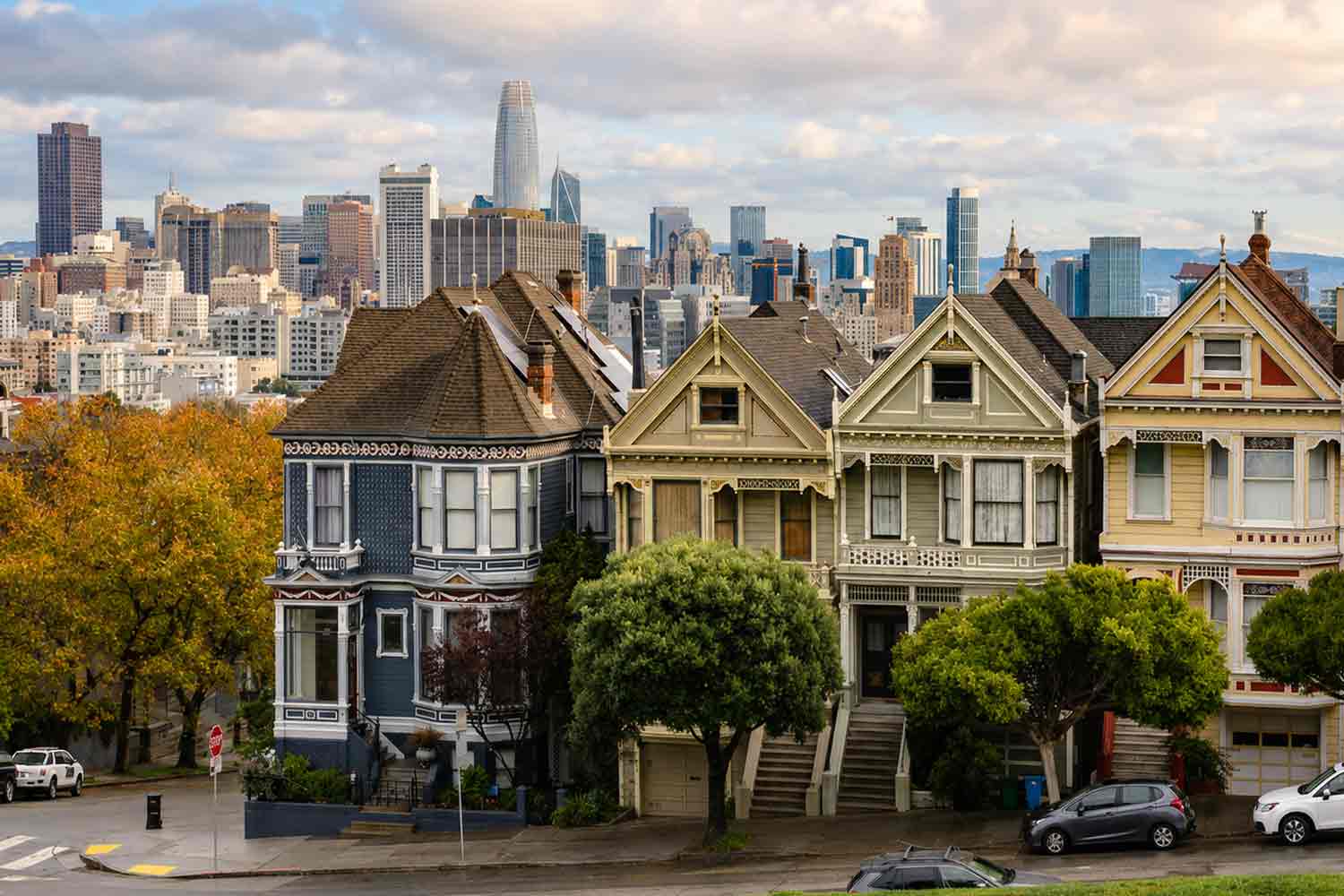
Why San Francisco’s Luxury Real Estate Market Is Surging in 2026
07/28/2026
Only a few years ago, questions remained about whether San Francisco could reclaim its position as one of North America’s premier luxury real estate markets.
In 2026, the answer is becoming increasingly clear. Luxury sales are rising sharply, available inventory is contracting, and well-positioned properties are attracting intense competition. Renewed confidence in the technology sector, expanding artificial intelligence companies, and substantial new wealth creation are helping bring affluent buyers back into the market.
But San Francisco’s resurgence is not simply a return to previous conditions. It reflects a luxury market operating under a distinct set of financial and lifestyle considerations—one in which limited supply, decisive buyers, and exceptionally strong demand are reinforcing one another.
A Luxury Market Defined by Scarcity
The most important force shaping San Francisco’s luxury market is not simply rising demand. It is the widening imbalance between buyer interest and available inventory.
Across both single-family homes and attached properties, sales have increased substantially while inventory has fallen. As a result, buyers are competing for a limited number of high-quality homes in prime neighborhoods.
That scarcity is supporting pricing, shortening marketing times, and giving sellers considerable leverage.
For luxury real estate professionals, the larger lesson is that San Francisco’s recovery is not being driven by a broad increase in supply or speculative development. It is being shaped by renewed demand entering a market that already has significant physical and geographic limitations.
Luxury Single-Family Homes Favor Sellers
San Francisco’s luxury single-family market remained firmly in seller’s-market territory throughout the second quarter of 2026.
Sales increased:
- 47% year over year in April
- 57% in May
- 71% in June
At the same time, inventory declined by 41% compared with June 2025 and averaged approximately 40% below the previous year’s levels from April through June.
This widening gap between supply and demand has continued to support values. Median sold prices increased 5% year over year in June, following gains of 12% in May and 10% in April. Average monthly sold prices across the luxury sector remained exceptionally strong at approximately $3.6 million.
Competition Extends Well Beyond the Asking Price
The market’s absorption rates offer one of the clearest indications of current buyer intensity.
In June, the $3.1 million to $3.4 million price range recorded a 425% selling rate. That means the number of homes sold during the month was more than four times the inventory remaining at month-end.
The most active price segment has shifted slightly from month to month, largely because so few listings are available. However, demand has consistently exceeded supply across the market’s most competitive ranges.
Once properties reach the market, buyers are moving quickly.
Luxury single-family homes averaged just 12 days on market during the previous three months. In June, sold properties achieved an average of 117.9% of their asking price, compared with 102.8% during the same month in 2025.
That difference signals more than strengthening prices. It demonstrates how aggressively qualified buyers are competing when desirable properties become available.
What San Francisco Luxury Buyers Want
The strongest demand continues to center on homes offering:
- 2,000 to 3,000 square feet
- Four bedrooms
- Three to four bathrooms
- Median sold prices near $3.35 million
In many luxury markets, prestige is closely associated with expansive acreage and estate-scale homes. San Francisco operates differently.
Because large properties are relatively uncommon, luxury is defined less by sheer size and more by location, architectural quality, thoughtful use of space, privacy, views, functionality, and access to the city’s lifestyle.
This distinction matters when positioning San Francisco homes. A property does not need to resemble a traditional estate to offer meaningful luxury value.
Attached Luxury Properties Are Also Accelerating
San Francisco’s luxury attached market is following a similarly strong trajectory.
Sales increased:
- 74% year over year in April
- 77% in May
- 52% in June
Median sold prices also strengthened each month, finishing June 14% above the previous year and averaging approximately $2.6 million during the spring.
Meanwhile, inventory fell 31% year over year in June and remained approximately 30% below 2025 levels from April through June.
The shortage of available properties has become so pronounced that the most active price ranges can change depending on what is listed in a particular month. Overall, the $2.5 million to $2.7 million segment attracted some of the strongest activity, while several price bands recorded absorption rates exceeding 300%.
Attached Homes Are Selling Quickly—and Above Asking
Luxury attached properties averaged just 11 days on market during the previous three months.
In June, they sold for an average of 117.6% of asking price, compared with 101.8% one year earlier.
The most sought-after properties typically offered:
- 1,500 to 2,000 square feet
- Three bedrooms
- Three bathrooms
- Modern layouts supporting city living
These homes appeal to a range of affluent buyers, including younger technology professionals, returning urban residents, downsizers, and buyers who value convenience, walkability, and a lower-maintenance lifestyle.
The strength of this segment illustrates that San Francisco’s resurgence is not limited to traditional single-family homes. Demand is extending across multiple property types and buyer profiles.
What Is Driving San Francisco’s Luxury Comeback?
Several forces are converging. Together, these factors are creating a market in which buyer confidence is returning faster than inventory can respond.
New wealth is entering the market
The expansion of artificial intelligence and technology companies has created new liquidity, compensation opportunities, and confidence among highly qualified buyers.
Financial confidence has improved
Affluent buyers who delayed decisions during periods of uncertainty appear increasingly willing to re-enter the market when desirable properties become available.
Inventory remains exceptionally constrained
San Francisco’s geography, density, construction limitations, and established neighborhoods restrict the number of luxury homes available at any given time.
Luxury buyers remain less constrained by affordability
Unlike many buyers in the broader market, affluent purchasers may rely less heavily on traditional financing and remain focused on long-term value, location, privacy, and lifestyle.
What This Means for Luxury Real Estate Professionals
San Francisco’s resurgence creates meaningful opportunities, but it also raises expectations for both buyer and seller representation.
For sellers
Strong demand does not eliminate the need for strategic positioning. Presentation, pricing, timing, and exposure still determine whether a property attracts broad interest or generates the level of competition seen in the strongest segments.
For buyers
Preparation is increasingly important. Clients should understand that desirable homes may sell quickly and significantly above asking. Clear priorities, verified financial readiness, and decisive negotiation strategies can make the difference when several qualified buyers pursue the same property.
For agents
Market fluency is essential. Professionals should be able to explain:
- how rapidly conditions are changing,
- why asking price may not reflect the probable selling price,
- which property types are attracting the strongest demand,
- and how inventory limitations affect negotiation strategy.
In a market this competitive, clients need more than access to listings. They need an advisor who can interpret the data, anticipate competition, and help them act with confidence.
San Francisco’s Recovery Reveals a Larger Luxury-Market Divide
San Francisco’s performance also reinforces a broader trend within luxury real estate.
Affluent buyers are not always responding to the same pressures shaping the overall housing market. While borrowing costs and affordability remain significant obstacles for many consumers, wealthy purchasers may continue moving forward when they perceive long-term value, limited supply, and an opportunity to secure an exceptional property.
That does not make the luxury sector immune to economic change. It does mean that conventional assumptions about demand may not fully explain the behavior of affluent buyers.
As the second half of 2026 unfolds, San Francisco appears positioned to remain one of North America’s most competitive luxury markets.
Unless inventory increases meaningfully, sellers are likely to retain the advantage—and buyers should expect continued competition for well-located, move-in-ready homes.
Stay Ahead With The Institute
Understanding the forces shaping luxury markets allows real estate professionals to advise affluent clients with greater confidence and precision.
The Institute for Luxury Home Marketing provides advanced training, market intelligence, and professional resources designed to help agents strengthen their expertise and grow their luxury real estate practice.
Explore The Institute’s training options and discover how the Certified Luxury Home Marketing Specialist™ designation can help prepare you to serve today’s luxury buyers and sellers.